
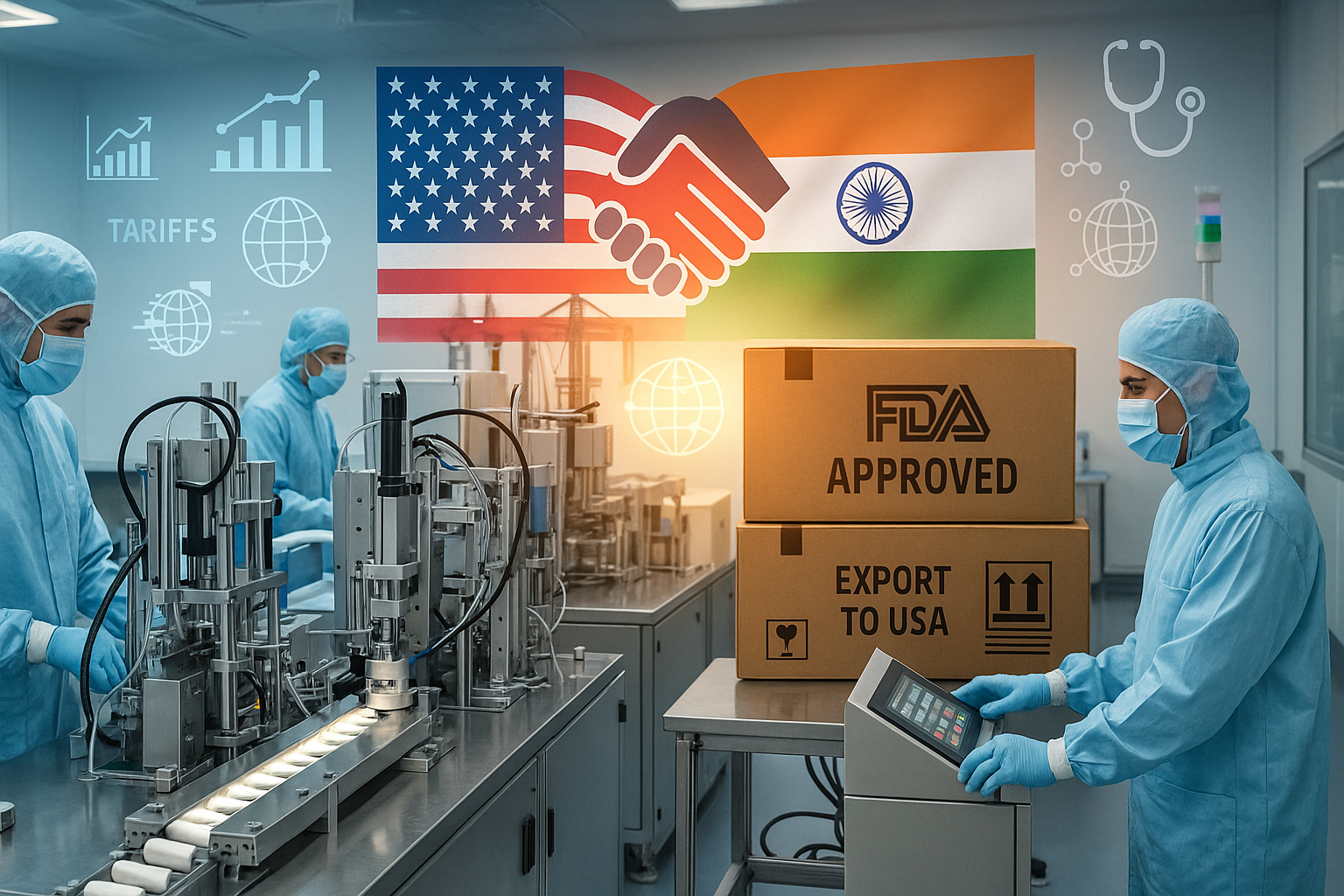
in a dramatic reshaping of global trade dynamics, India is rapidly positioning itself as a key supplier of medical devices to the United States, stepping into a vacuum left by declining Chinese exports amid rising tariffs and geopolitical tensions.
As the Biden administration maintains and expands tariffs on Chinese goods—including a crucial category of medical equipment—India’s growing manufacturing capabilities, regulatory compliance, and strategic diplomacy are turning it into the next big player in the U.S. healthcare supply chain.
Why the Shift? The China-U.S. Trade Disconnect
The United States and China, once tightly linked in global supply chains, are now facing a prolonged economic decoupling, especially in sensitive sectors like health tech and medical equipment. The latest round of tariffs, effective from mid-2025, places additional duties on a range of Class I and II medical devices—from surgical gloves to diagnostic equipment—imported from China.
This has led to:
-
Increased import costs for U.S. healthcare providers.
-
Sourcing disruptions, especially post-COVID, when hospitals are rebuilding inventories.
-
A strategic rethink by U.S. importers, who now seek alternative, low-cost but high-quality suppliers.
India’s Golden Opportunity
🏭 Manufacturing Muscle
India has steadily developed its medical device manufacturing hubs, with states like Gujarat, Maharashtra, and Tamil Nadu home to hundreds of FDA-compliant factories producing everything from stents to imaging devices.
🌍 Policy Push
The Indian government’s Production Linked Incentive (PLI) scheme and the “Make in India” initiative are fueling capital investment, R&D, and exports in the medtech space.
🔗 Regulatory Readiness
India’s Central Drugs Standard Control Organization (CDSCO) has streamlined regulatory processes to align with U.S. FDA norms, easing certification and market access.
Key U.S. Imports from India Surge
According to U.S. trade data (Q1 2025):
-
Imports of surgical instruments from India rose 62% year-over-year.
-
Diagnostic kits jumped by 45%.
-
Medical disposables, including gloves and catheters, increased by 58%, reflecting substitution away from Chinese products.
Industry Response
🔹 U.S. Healthcare Distributors
Companies like Cardinal Health and McKesson have started expanding sourcing contracts with Indian firms to hedge against China-related cost volatility.
🔹 Indian Manufacturers
Major Indian players like Trivitron, Poly Medicure, and Sahajanand Medical Technologies are scaling operations, expanding U.S. warehousing networks, and deepening B2B ties.
Challenges Ahead
While India’s prospects look bright, several challenges remain:
-
Logistics Bottlenecks: Port delays and air freight constraints can hinder rapid delivery.
-
Quality Consistency: Despite FDA approvals, some Indian SMEs face scrutiny over uniform standards.
-
Global Competition: Countries like Vietnam and Mexico are also vying for the same market segment.
Geopolitical Winds Favor India
India’s neutral diplomatic stance, free trade negotiations with the U.S., and increasing emphasis on secure and diversified supply chains play in its favor. The U.S.–India Trade Policy Forum has already signaled fast-tracking approvals for Indian suppliers in critical sectors.
As U.S. regulators and buyers seek stability, India’s blend of cost-efficiency, regulatory maturity, and political alignment could make it the new epicenter of America’s medical device sourcing strategy.
Conclusion
India is no longer just an emerging alternative to China—it is becoming a strategic health-tech partner for the U.S. The next few quarters will determine how well India can scale its operations, maintain quality standards, and fully capitalize on this once-in-a-generation trade shift.
FAQs
❓Why is the U.S. shifting medical device imports away from China?
Due to ongoing tariffs, geopolitical friction, and the need for supply chain resilience, the U.S. is diversifying sources to reduce dependency on China.
❓What makes India a strong contender in this sector?
India offers FDA-compliant manufacturing, cost competitiveness, growing R&D, and government policy support for exports.
❓Which products is India exporting most to the U.S.?
India is exporting surgical tools, diagnostic kits, stents, syringes, and disposables like gloves and catheters.
❓Will India permanently replace China in this space?
While India is gaining ground, full replacement depends on consistent quality, speed of delivery, and competitive pricing over the long term.