
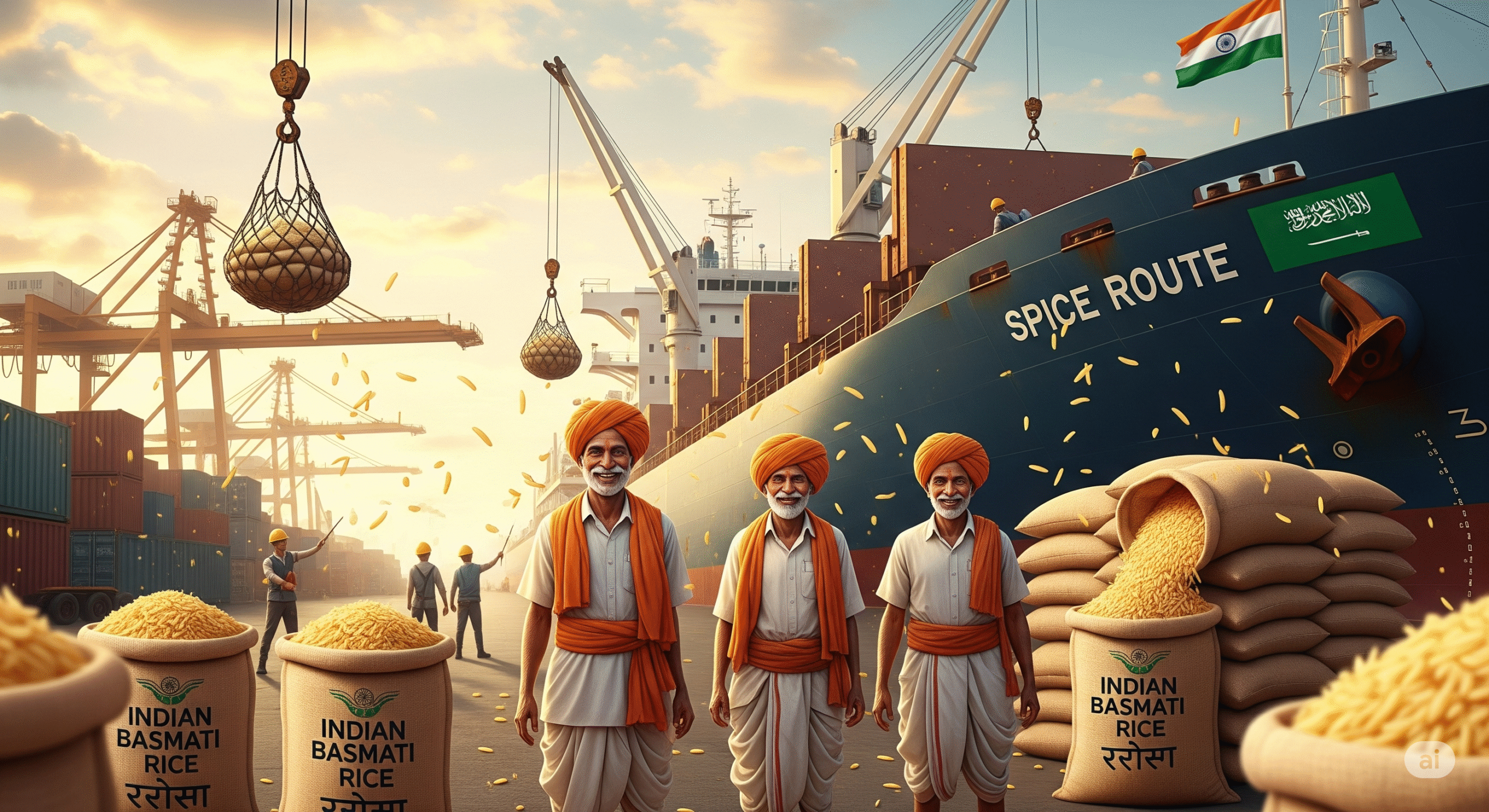
India’s basmati rice — renowned worldwide for its distinct aroma, long slender grains, and rich flavor — is not just a culinary staple but a symbol of heritage, diplomacy, and global trade. Among its biggest admirers is Saudi Arabia, which imports nearly 7 lakh metric tons of Indian basmati rice every year, making it one of the top international consumers of this royal grain.
In a world where food is often a cultural ambassador, India’s basmati rice serves as a fragrant thread weaving together international relations, particularly with the Middle East. This article explores the significance of India’s basmati exports, the depth of Indo-Saudi trade relations, and the global power of a single grain.
🌍 India’s Basmati: The World’s Most Loved Rice
Basmati — derived from the Sanskrit word “Vasmati”, meaning “fragrant” — is grown primarily in the northwestern plains of India, especially in Punjab, Haryana, Himachal Pradesh, and Uttar Pradesh.
What makes Indian basmati unique:
-
Extra-long grain size
-
Natural aroma
-
Fluffiness and non-stickiness after cooking
-
Rich flavor, perfect for biryanis and royal dishes
India accounts for over 70% of global basmati exports, with an expanding market in Middle Eastern, European, and North American countries.
📦 Why Saudi Arabia Imports Over 7 Lakh Tons Annually
✅ 1. Culinary Heritage
Basmati rice is at the heart of Saudi Arabian cuisine, especially in traditional dishes like Kabsa, Mandi, and Biryani — all of which rely on the rich flavor of Indian basmati.
✅ 2. Strong Trade Relations
India and Saudi Arabia share a strategic partnership rooted in energy, culture, labor, and food supply. Basmati rice has become a vital export that reinforces economic diplomacy.
✅ 3. Consistent Quality & Supply
Indian exporters ensure high-quality control, hygiene, and timely shipments, building long-standing trust with Gulf-based importers and retailers.
✅ 4. Religious & Cultural Significance
During Ramadan, Eid, and weddings, basmati rice is a staple in celebratory feasts. Its symbolic presence makes it a key part of Saudi Arabia’s culinary identity.
📊 India’s Basmati Export Statistics
-
Total annual export of basmati rice from India: ~4.5 million tons
-
Exports to Saudi Arabia: ~700,000 tons/year
-
Export value to Saudi: Over ₹6,000 crores (approx. $750 million) annually
-
Other key importing countries: Iran, UAE, Iraq, Yemen, USA, and the UK
🏛️ Basmati as a Soft Power Tool
Basmati rice is more than just food — it’s:
-
A symbol of India’s soft power in foreign policy
-
A cultural connector between diverse nations
-
A key pillar in agri-diplomacy and international goodwill
When Indian basmati reaches dinner tables in Riyadh or Jeddah, it brings with it the essence of Indian soil, farmer labor, and centuries of culinary tradition.
🌾 India’s Efforts to Sustain Basmati Dominance
-
Geographical Indication (GI) tagging to protect authentic basmati
-
Promotion under APEDA (Agricultural and Processed Food Products Export Development Authority)
-
Agri-tech innovations to boost yield and reduce pesticide usage
-
Ensuring organic and sustainable farming practices
❓ Frequently Asked Questions (FAQs)
🔹 Q1. Why is Indian basmati so special?
A1: Indian basmati is known for its extra-long grain, rich aroma, soft texture, and fluffy, separate grains after cooking — unmatched globally.
🔹 Q2. How much basmati does Saudi Arabia import annually?
A2: Saudi Arabia imports approximately 7 lakh metric tons of Indian basmati rice every year.
🔹 Q3. Is India the largest exporter of basmati?
A3: Yes, India is the world’s largest exporter, accounting for more than 70% of global basmati rice trade.
🔹 Q4. What is the economic impact of basmati exports on India?
A4: Basmati exports contribute over ₹30,000 crores ($3.6 billion) annually to India’s agri-export economy, benefiting millions of farmers.
🔹 Q5. Is Indian basmati GI-tagged?
A5: Yes, Indian basmati rice has Geographical Indication (GI) protection to preserve its authenticity and heritage.
🏁 Conclusion
India’s basmati rice is not just a grain — it’s a global icon of aroma, quality, and cultural richness. As Saudi Arabia continues to import vast quantities of this treasured rice, the trade is more than economic; it’s a culinary handshake, a shared tradition, and a symbol of deep-rooted friendship. In every fragrant bowl served abroad, there’s a story of Indian soil, farmer pride, and timeless taste.