
Washington, D.C. – July 31, 2025
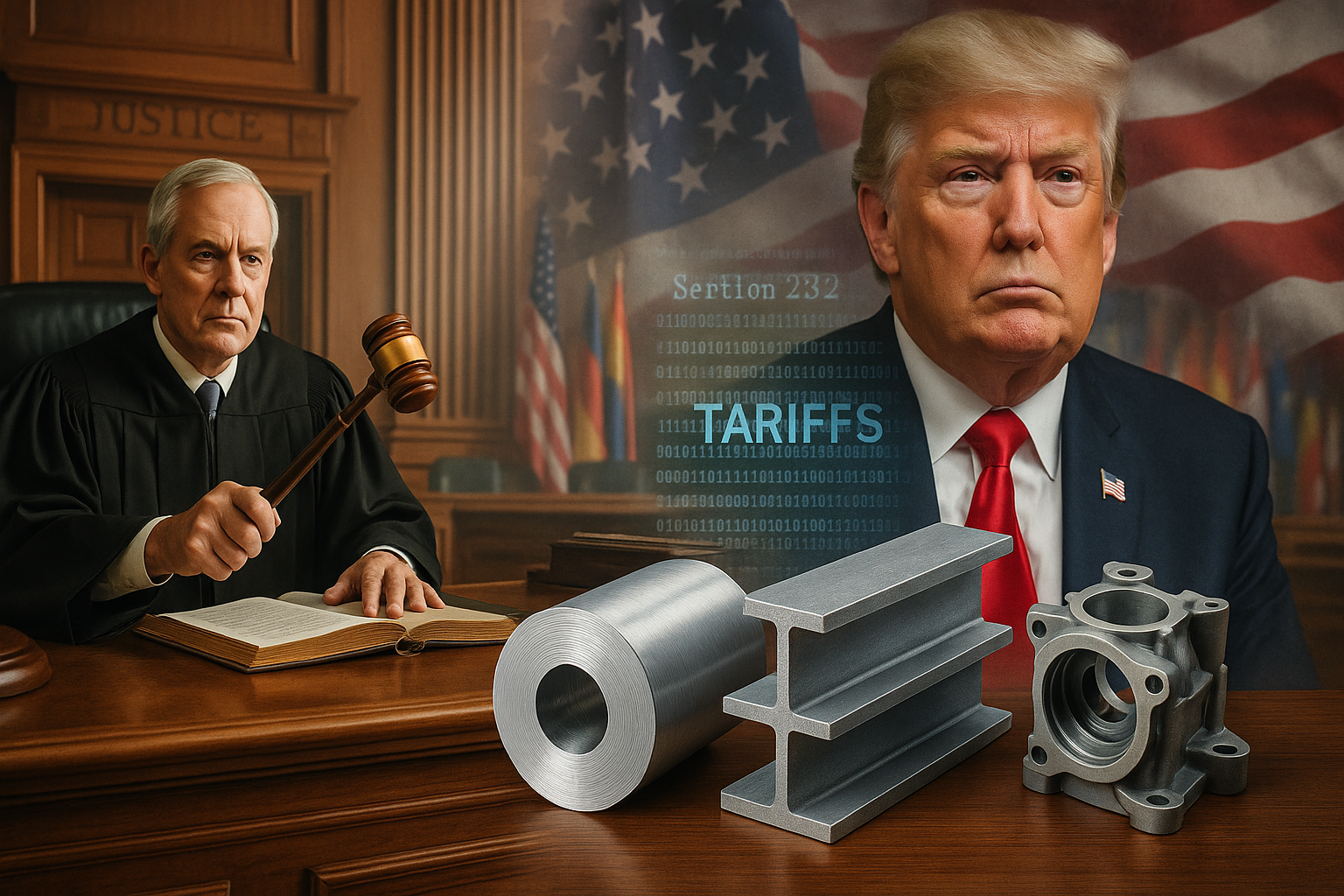
A pivotal legal showdown is unfolding today as the U.S. Court of Appeals hears a major challenge to the controversial tariffs imposed during former President Donald Trump’s administration. These tariffs, originally justified under national security grounds, are now under judicial scrutiny—potentially setting the stage for a landmark ruling with deep implications for international trade and presidential power.
Background: Trump’s Tariff Strategy
In 2018, former President Trump invoked Section 232 of the Trade Expansion Act of 1962 to impose sweeping tariffs on steel and aluminum imports. These tariffs, which affected key allies such as Canada, Mexico, and the European Union, were justified on the basis that reliance on foreign steel posed a national security threat.
Though the tariffs were lauded by domestic manufacturers and Trump’s political base, they triggered retaliatory tariffs from foreign governments and sparked numerous lawsuits. Critics argued that the measures were economically damaging and legally overreaching, especially because the national security rationale was viewed by many as a cover for protectionism.
What’s at Stake in Today’s Appeals Court Hearing
Today’s hearing centers on whether the executive branch, under Section 232, has unlimited discretion in determining what constitutes a national security threat—or if there are constitutional limits to this power.
The plaintiffs, including several trade associations and importers, argue that:
-
The tariffs were implemented in a legally flawed manner, including extended deadlines and deviations from procedural norms.
-
The broad delegation of authority to the president violates the nondelegation doctrine, a legal principle restricting Congress from handing over legislative powers to the executive without clear guidelines.
The federal government, in contrast, maintains that the tariffs were:
-
Consistent with the law, given the vague language of Section 232.
-
Necessary to preserve American industrial capacity, particularly amid rising global tensions and supply chain vulnerabilities.
Economic & Political Implications
The outcome of this legal battle could have sweeping effects on:
-
Presidential Power – A ruling against the tariffs could redefine limits on executive authority in economic matters.
-
Trade Policy – A decision to curtail tariff powers might impact future administrations, including a possible second Trump term or any current Biden-era policies.
-
Global Markets – Foreign governments and trade partners are closely watching, as the ruling may affect ongoing negotiations and WTO complaints.
Industry Reactions
🔹 Manufacturers
U.S. steelmakers and aluminum producers remain supportive of the tariffs, arguing they protected American jobs and boosted domestic output.
🔹 Importers and Retailers
On the flip side, industries relying on imported raw materials argue they have been saddled with higher costs, disrupted supply chains, and competitive disadvantages.
Legal Precedent: What Comes Next?
Legal scholars note that the Supreme Court may eventually take up the case, especially if the appellate decision signals a shift in how broadly presidents can act under economic emergency statutes. Previous cases, such as the Youngstown Sheet & Tube Co. v. Sawyer (1952), have shaped the balance between Congressional intent and executive overreach.
Public and Political Reactions
As the case unfolds, it has become a flashpoint in the broader 2024–2025 election narrative. Trump’s campaign touts the tariffs as a model of “America First” strength, while critics label it a costly experiment in economic isolationism.
Conclusion
The appeals court’s upcoming decision could be one of the most consequential rulings on trade and presidential authority in recent history. Whether it upholds or dismantles Trump’s tariff regime, the ripple effects will likely be felt far beyond Washington—reaching into boardrooms, factories, and diplomatic chambers across the globe.
FAQs
❓Why were Trump’s tariffs controversial?
Trump’s tariffs were imposed under the guise of national security, but many saw them as protectionist measures that strained relations with allies and increased domestic prices.
❓What is Section 232 of the Trade Expansion Act?
It allows the president to impose tariffs if imports threaten national security. However, the vague language has led to legal challenges about the scope of presidential authority.
❓What industries were most affected by these tariffs?
Steel, aluminum, automotive, construction, and tech industries were heavily impacted due to increased material costs and retaliatory trade barriers.
❓Could this case impact future presidents?
Yes. If the court limits presidential discretion under Section 232, it could reshape trade policy and how future presidents respond to global economic threats.