
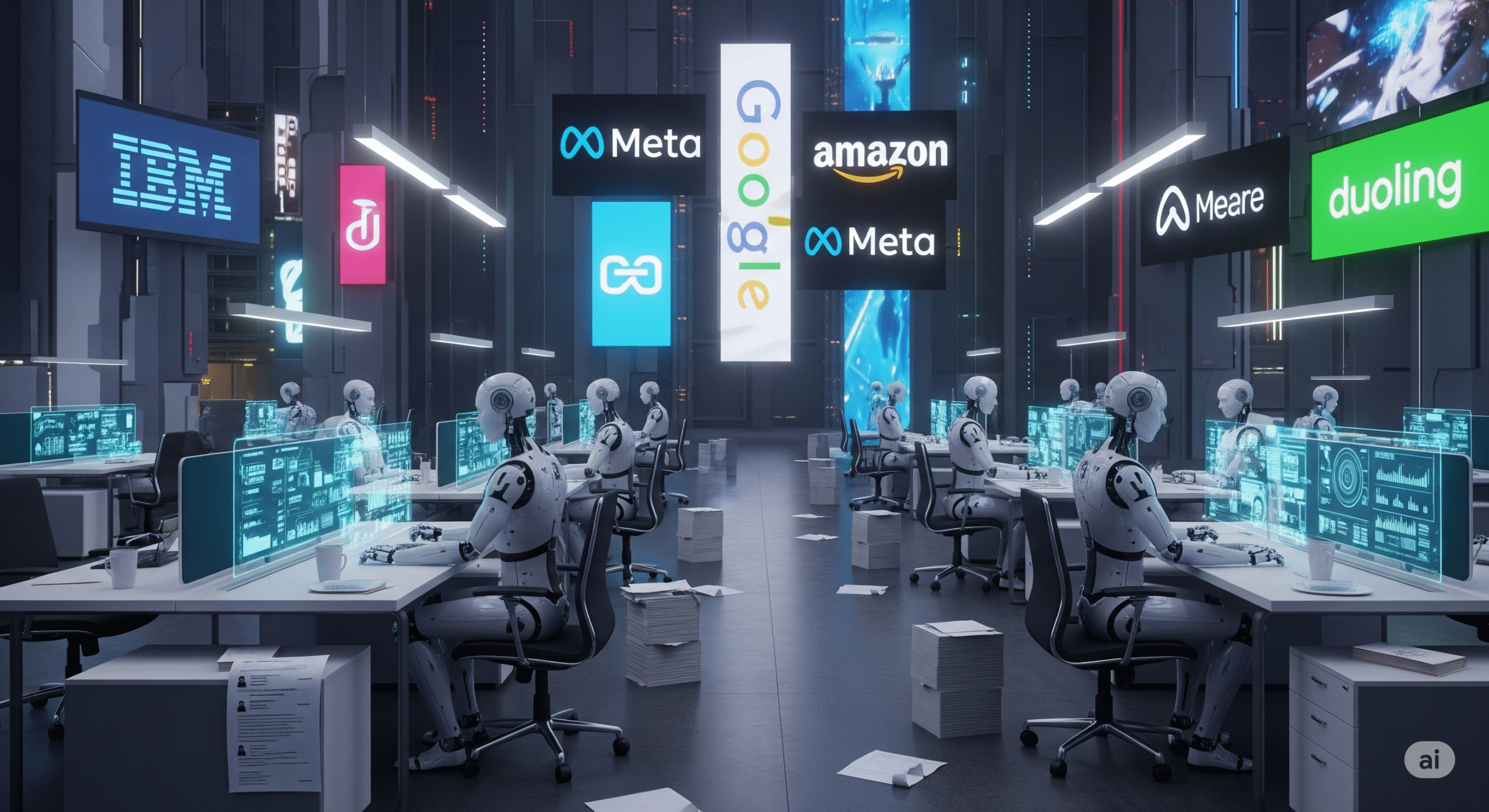
🤖 The Rise of AI Replacements: How Tech Giants Are Replacing Humans with Machines
In a bold, controversial shift that is reshaping the modern workforce, several of the world’s largest tech companies have openly admitted to replacing human staff with Artificial Intelligence (AI). From Silicon Valley to Asia’s tech hubs, automation is no longer a future possibility—it’s a present reality.
While AI has long been touted as a tool to assist humans, today’s developments are shifting that narrative. AI models are now replacing jobs outright, especially in customer service, marketing, coding, and even legal and finance departments. As generative AI, machine learning, and robotic process automation become more capable and cost-effective, companies are choosing algorithms over employees.
Let’s take a detailed look at the biggest tech companies that have publicly confirmed staff cuts in favor of AI, and how this trend is expected to shape the next generation of employment.
🏢 Major Tech Companies Replacing Staff with AI
1. IBM
In a 2023 interview with Bloomberg, IBM CEO Arvind Krishna revealed that the company would pause hiring for roles “that could be replaced by AI in the near future.” This impacted nearly 7,800 jobs, mostly in HR and back-office functions.
“I could easily see 30% of those roles replaced by AI and automation over five years,” Krishna stated.
2. Amazon
Amazon has integrated AI extensively in its customer support, logistics, and warehousing operations. In 2024, Amazon replaced thousands of call center employees with AI-powered chatbots like Alexa for Business.
The company also deployed AI-powered robots in over 70% of its fulfillment centers, significantly reducing the need for manual labor.
3. Google (Alphabet Inc.)
Alphabet confirmed in a 2024 investor update that it was streamlining roles in advertising and marketing with the help of generative AI models like Gemini. Internal sources reported that AI tools are now generating campaign strategies, copywriting, and even coding assistance, replacing hundreds of jobs.
Google’s legal and finance teams have also integrated AI-powered tools for contract review and financial reporting, displacing junior-level roles.
4. Meta (Facebook)
Meta has publicly embraced AI to optimize content moderation, code generation, and project management. In 2023 and 2024, the company conducted multiple rounds of layoffs, with Mark Zuckerberg stating that AI was enabling the company to “do more with less.”
Many of these layoffs came from technical support, administrative, and design departments, now heavily supported by LLaMA-based internal AI tools.
5. Accenture
Although not a traditional tech product company, Accenture is a global IT services leader and publicly stated in 2023 that it would cut 19,000 jobs over 18 months due to increasing use of AI.
Accenture invested over $3 billion in AI capabilities, focusing on automating services it traditionally offered through human consultants.
6. Duolingo
In 2023, Duolingo replaced nearly all of its human translation contractors with GPT-based AI tools, citing faster output and lower cost.
CEO Luis von Ahn confirmed this shift in an interview, stating,
“We realized our AI was better, faster, and cheaper at generating lesson content.”
7. Dropbox
Dropbox’s CEO Drew Houston openly acknowledged in 2023 that AI was the main reason for workforce reduction. The company laid off 500 employees, citing a “shift to AI-focused development” and a need for a smaller, more AI-centric team.
8. Spotify
In late 2023, Spotify reduced staff in its podcast division and replaced several human editors with AI tools that could generate audio highlights, transcripts, and even basic commentary.
📊 The Economic Incentive Behind the Shift
| Benefit | Impact |
|---|---|
| 💸 Cost Savings | Companies save millions in salaries and benefits. |
| ⏱️ Increased Efficiency | AI works 24/7 without fatigue. |
| 📉 Risk Reduction | Fewer errors in repetitive tasks. |
| 🔍 Scalable Innovation | Faster development cycles with generative AI. |
But it’s not all positive: the trend raises concerns about job displacement, data ethics, and long-term impacts on human creativity.
📌 Frequently Asked Questions (FAQ)
❓Which industries are most affected by AI-based staff replacement?
Answer: Tech, finance, customer support, logistics, education, and content creation industries are most impacted due to the automation of repetitive and predictable tasks.
❓Are all job losses in tech directly due to AI?
Answer: Not entirely. Some are due to economic slowdowns, restructuring, or acquisitions, but AI is often a primary enabler of those reductions.
❓Can AI replace creative or leadership roles too?
Answer: Not entirely, but AI is already assisting in design, writing, and planning tasks. Leadership roles still require human intuition and decision-making—but AI is narrowing the gap.
❓What can professionals do to stay relevant in the age of AI?
Answer: Upskill in AI tools, data analysis, prompt engineering, and hybrid tech roles. Embrace AI as a collaborator, not a competitor.
🔮 What’s Next?
While the current wave is focused on efficiency and profit, experts warn that governments and organizations must prepare for the social consequences. This includes retraining displaced workers, setting up ethical AI policies, and ensuring AI does not widen income inequality.
The shift is inevitable—but how we respond to it will determine whether AI empowers or replaces us.
💬 Final Thoughts
The AI revolution isn’t coming — it’s already here. As the largest tech companies admit to cutting jobs in favor of intelligent machines, professionals and policymakers alike must adapt to a rapidly evolving employment landscape. While automation brings promise, it also demands responsibility, foresight, and innovation from society as a whole.
Stay informed. Stay skilled. Stay human.