
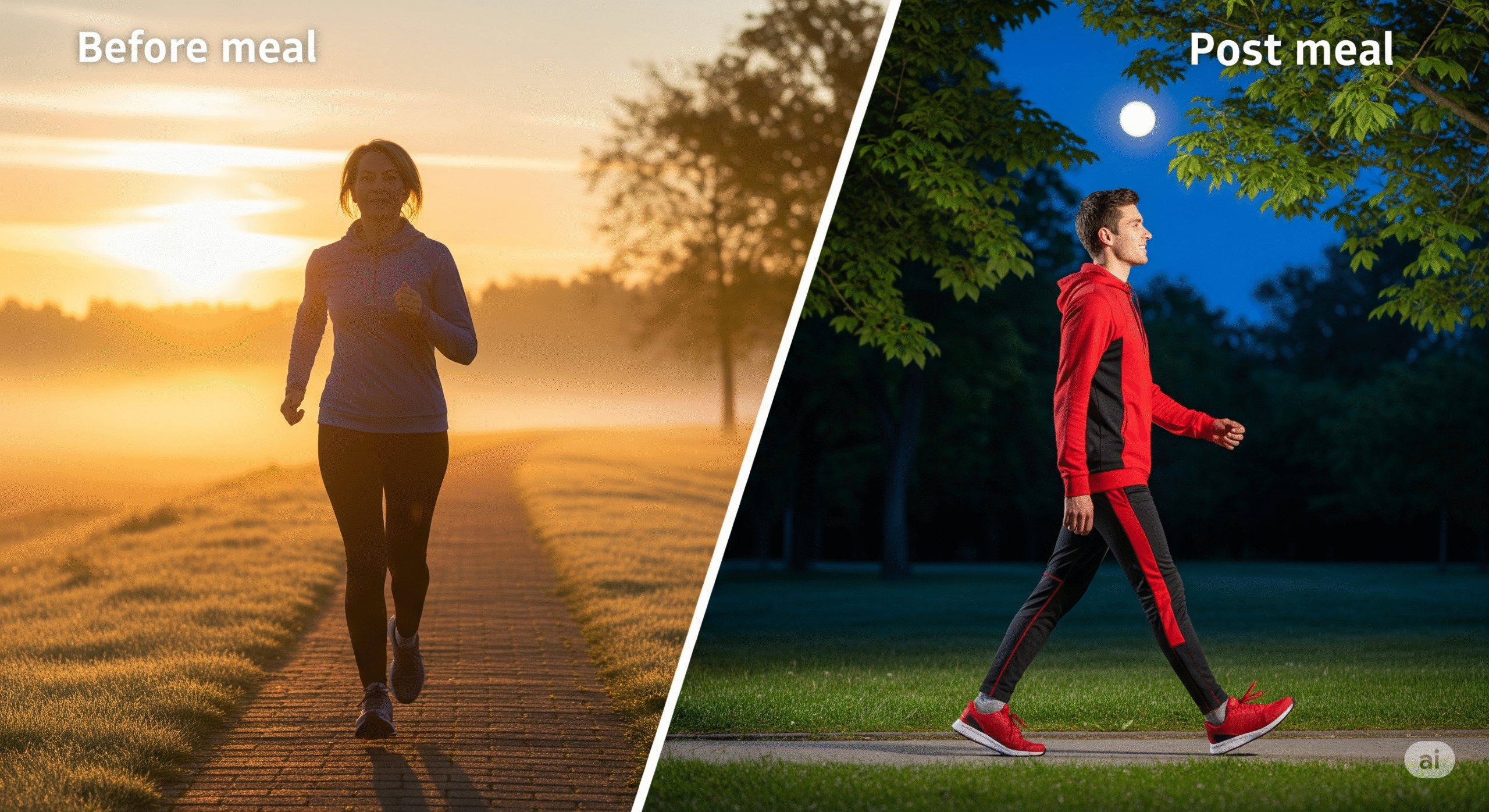
In the ever-evolving world of fitness and health, walking remains one of the most accessible and effective forms of physical activity. Whether you’re just starting your weight loss journey or looking to optimize your current routine, the timing of your walk—before or after a meal—can influence the results. So, which is better for weight loss: walking before meals or after meals? Let’s explore both sides in detail and uncover what science and experts have to say.
🔹 Walking Before Meals: The Science Behind It
Walking before a meal is often associated with fasted cardio, especially when done in the morning before breakfast. Here’s how it impacts your body:
🔍 Benefits of Walking Before Meals
-
Boosts Fat Burning
Walking in a fasted state may help the body tap into fat stores for energy, particularly during low to moderate-intensity walks. -
Appetite Regulation
A brisk walk before eating may reduce hunger hormones temporarily, which helps in controlling portion sizes during meals. -
Enhances Energy Levels
It stimulates endorphin production, promoting a fresh and energized start to the day. -
Improved Blood Sugar Control (for some)
Individuals with insulin sensitivity may benefit from walking before eating, as it may help reduce blood glucose spikes after meals.
🔹 Walking After Meals: A Post-Meal Power Move
Walking after eating has gained popularity for its digestive and metabolic benefits. In fact, several studies highlight that even 10-15 minutes of walking after a meal can have profound effects on your health.
🔍 Benefits of Walking After Meals
-
Improves Digestion
Light walking stimulates gastric motility, helping food move through the digestive tract more efficiently. -
Reduces Blood Sugar Spikes
According to research from the American Diabetes Association, post-meal walking significantly lowers blood glucose levels, which is especially helpful for weight management and diabetes prevention. -
Increases Caloric Burn
While walking after meals may not burn more fat directly, it helps in burning additional calories throughout the day, contributing to an overall calorie deficit. -
Prevents Bloating and Acidity
Gentle walking after a meal can prevent common gastrointestinal issues such as bloating and acid reflux.
🥗 Before Meal vs. After Meal: Head-to-Head Comparison
| Criteria | Walking Before Meal | Walking After Meal |
|---|---|---|
| Fat Burning Potential | Higher in fasted state | Moderate |
| Blood Sugar Regulation | Moderate | Excellent |
| Appetite Control | Can suppress hunger slightly | Limited effect |
| Digestion | No significant impact | Greatly improved |
| Energy Levels | Boosts alertness | May reduce post-meal sluggishness |
| Ideal Duration | 20–30 minutes | 10–20 minutes |
| Time of Day | Morning (ideally) | After lunch or dinner |
✅ So, Which Is Better for Weight Loss?
The answer lies in your goal and lifestyle.
-
If you’re targeting maximum fat burn, especially in the morning, walking before meals might work best.
-
If you want to regulate blood sugar, improve digestion, and support metabolic health, walking after meals is incredibly beneficial.
-
Best-case scenario: Combine both. A brisk morning walk (before breakfast) and a short post-meal walk (after dinner) can create the perfect balance for fat loss and metabolic health.
💡 Expert Tip:
Avoid intense walking immediately after a heavy meal. Stick to a light pace and wait 10-15 minutes after eating to begin. This ensures your body can manage digestion without discomfort.
🙋 Frequently Asked Questions (FAQs)
1. Is walking immediately after eating harmful?
Not at all. In fact, light walking is beneficial post-meal. However, avoid vigorous activity to prevent cramps or indigestion.
2. How long should I walk to see weight loss results?
Aim for at least 150 minutes per week of moderate-intensity walking (about 30 minutes a day, 5 days a week).
3. Can I walk both before and after meals?
Yes, combining both is highly effective for weight loss and overall health.
4. Does walking on an empty stomach burn more fat?
Fasted walking may increase fat oxidation, but overall calorie deficit matters more for weight loss.
5. What’s the best time to walk for weight loss?
Whenever you can consistently do it. Morning walks boost metabolism; evening/post-meal walks support digestion and fat metabolism.
🏁 Final Thoughts
Walking, whether before or after meals, is a simple yet powerful tool to support your weight loss goals. The key is consistency. While walking before meals can enhance fat metabolism, walking after meals significantly boosts digestion and helps control blood sugar spikes. Integrating both into your daily routine offers the most well-rounded health benefits—helping you walk your way to better health, one step at a time.