

The Ford GT 400 is more than a high-performance vehicle—it’s a living legend that bridges the gap between racing history and cutting-edge innovation. Inspired by the iconic Ford GT40 that conquered Le Mans in the 1960s, the GT 400 is Ford’s modern tribute to its glorious motorsport past—refined for the supercar arena of today.
In this article, we’ll take a deep dive into what makes the Ford GT 400 one of the most talked-about and searched-for supercars in the United States—exploring its legacy, design, performance, and unique appeal.
🏁 The Origins: Where It All Began
The story of the GT 400 is rooted in motorsport greatness. In the 1960s, Ford set out on a mission to dethrone Ferrari at the 24 Hours of Le Mans, leading to the creation of the Ford GT40—a mid-engine racing monster that went on to win the race four consecutive times from 1966 to 1969.
This spirit was reborn decades later with the 2005–2006 Ford GT, a retro-modern homage that rekindled the GT40’s fire. Then came the ultra-modern 2017–2022 Ford GT, with advanced aerodynamics and a futuristic carbon-fiber build.
Now, the Ford GT 400 takes the torch, combining historic DNA with next-gen supercar tech for a machine that is both a tribute and a titan.
🚀 Design & Aerodynamics: Form Built for Function
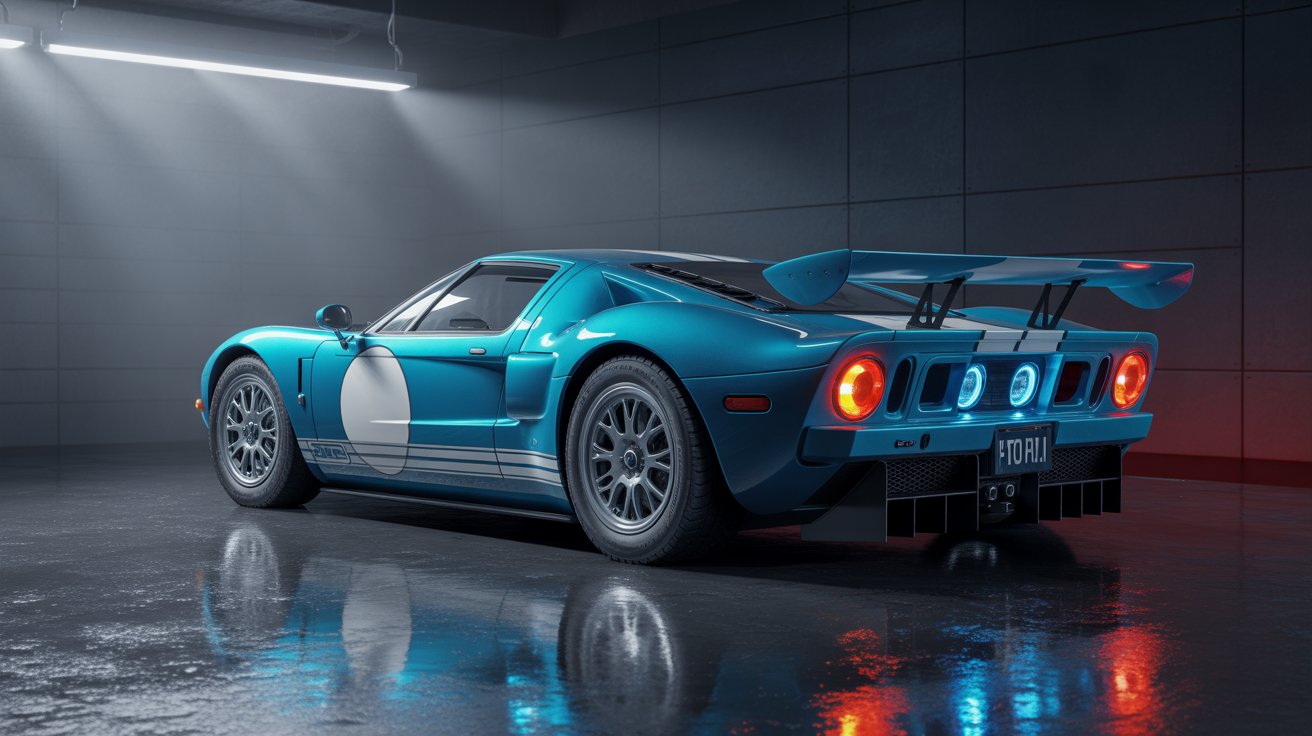
The GT 400’s design is the perfect blend of elegance, aggression, and aerodynamic efficiency. Every vent, curve, and panel has a purpose—enhancing speed, control, and cooling.
🔧 Key Design Features:
-
Teardrop Body Shape
Sculpted for minimal drag, inspired by endurance prototypes. -
Active Rear Wing
Automatically adjusts to driving conditions, maximizing downforce or reducing drag when needed. -
Carbon Fiber Construction
The body is made almost entirely from lightweight carbon fiber, improving agility and structural strength. -
Flying Buttresses
Rear pillars that guide airflow to improve high-speed stability—beautiful and functional.
The result? A car that looks like a fighter jet and moves like one too.
⚙️ Engine & Performance: Built to Dominate
Unlike its V8-powered ancestors, the GT 400 is powered by a 3.5-liter twin-turbocharged EcoBoost V6—a high-tech engine that proves big power doesn’t need big cylinders.
💥 Performance Specifications:
-
Engine: 3.5L EcoBoost V6 Twin-Turbo
-
Horsepower: 700+ HP
-
Torque: 600+ lb-ft
-
Top Speed: Over 220 mph
-
0–60 mph: Under 3 seconds
-
Transmission: 7-speed dual-clutch automatic
This engine is the same class-winning technology that helped Ford claim victory at Le Mans in 2016. It’s light, efficient, and brutally fast—delivering thrilling acceleration and precise throttle response.
🛞 Suspension & Handling: Precision on Every Turn
Speed is nothing without control, and the Ford GT 400 delivers both. Its suspension and stability systems are fine-tuned for track-ready performance and road comfort.
🧩 Suspension Highlights:
-
Adjustable Ride Height
Lowers automatically at speed for improved aerodynamics and grip. -
Pushrod Suspension System
A racing-style setup that enhances responsiveness and cornering. -
Active Dampers
Instantly adapt to driving conditions for smooth yet firm control. -
Electronic Stability Control
Offers maximum traction and control under hard acceleration or tricky surfaces.
From racetracks to twisty backroads, the GT 400 handles like a dream.
🖥️ Interior & Technology: Minimalist, Modern, Mighty
Step inside the GT 400, and you’ll find a cockpit designed with one goal in mind—performance-focused driving. It’s not about flashy features; it’s about function-first engineering.
📌 Interior Highlights:
-
Digital Driver Display
Customizable, real-time data for performance, telemetry, and diagnostics. -
Racing Bucket Seats
Carbon-fiber-framed, Alcantara-wrapped seats that provide racing-level support and comfort. -
Formula 1-Inspired Steering Wheel
Flat-bottom design with integrated controls for focus and functionality. -
Track Mode Interface
Dashboard and digital layouts shift dynamically for racing scenarios. -
SYNC Infotainment System
Supports Apple CarPlay and Android Auto for connectivity on the go.
Every interior element serves the driver—cutting out distractions and maximizing connection to the car.
🏎️ GT 400 vs. The Supercar Elite
How does the Ford GT 400 stack up against other track-bred machines? Let’s see how it compares to Lamborghini and Ferrari:
| Feature | Ford GT 400 | Lamborghini Huracán STO | Ferrari 296 GTB |
|---|---|---|---|
| Engine | 3.5L V6 Twin-Turbo | 5.2L V10 | 3.0L Twin-Turbo V6 + Hybrid |
| Horsepower | 700+ HP | 631 HP | 819 HP |
| 0–60 mph | Under 3.0 sec | 3.0 sec | 2.9 sec |
| Top Speed | 220+ mph | 193 mph | 205 mph |
| Estimated Price | $500,000+ | $327,000 | $340,000 |
The GT 400 proves that an American-made supercar can go wheel-to-wheel with the best from Italy—with performance, prestige, and technology to back it up.
🔍 Why It’s One of the Most Searched Cars in the U.S.
The buzz surrounding the Ford GT 400 isn’t just hype—it’s well-earned. Here’s what makes it stand out:
-
Rich Heritage: A direct bloodline from Le Mans legends.
-
Modern Mastery: State-of-the-art engineering, built for today.
-
Exclusivity: Limited production makes it ultra-rare and highly collectible.
-
Performance: Blistering speed, perfect balance, and race-tuned handling.
-
American Icon: A supercar that wears its red, white, and blue roots proudly.
In a world flooded with exotic cars, the GT 400 shines as a unique blend of past and future.
Final Verdict: The Pinnacle of Ford Engineering
The Ford GT 400 isn’t just a car—it’s a celebration of speed, legacy, and innovation. It’s everything a supercar should be: fast, rare, technologically advanced, and unmistakably bold.
For those lucky enough to experience it, the GT 400 offers more than horsepower—it delivers a direct connection to racing history and a glimpse into the future of American performance.

