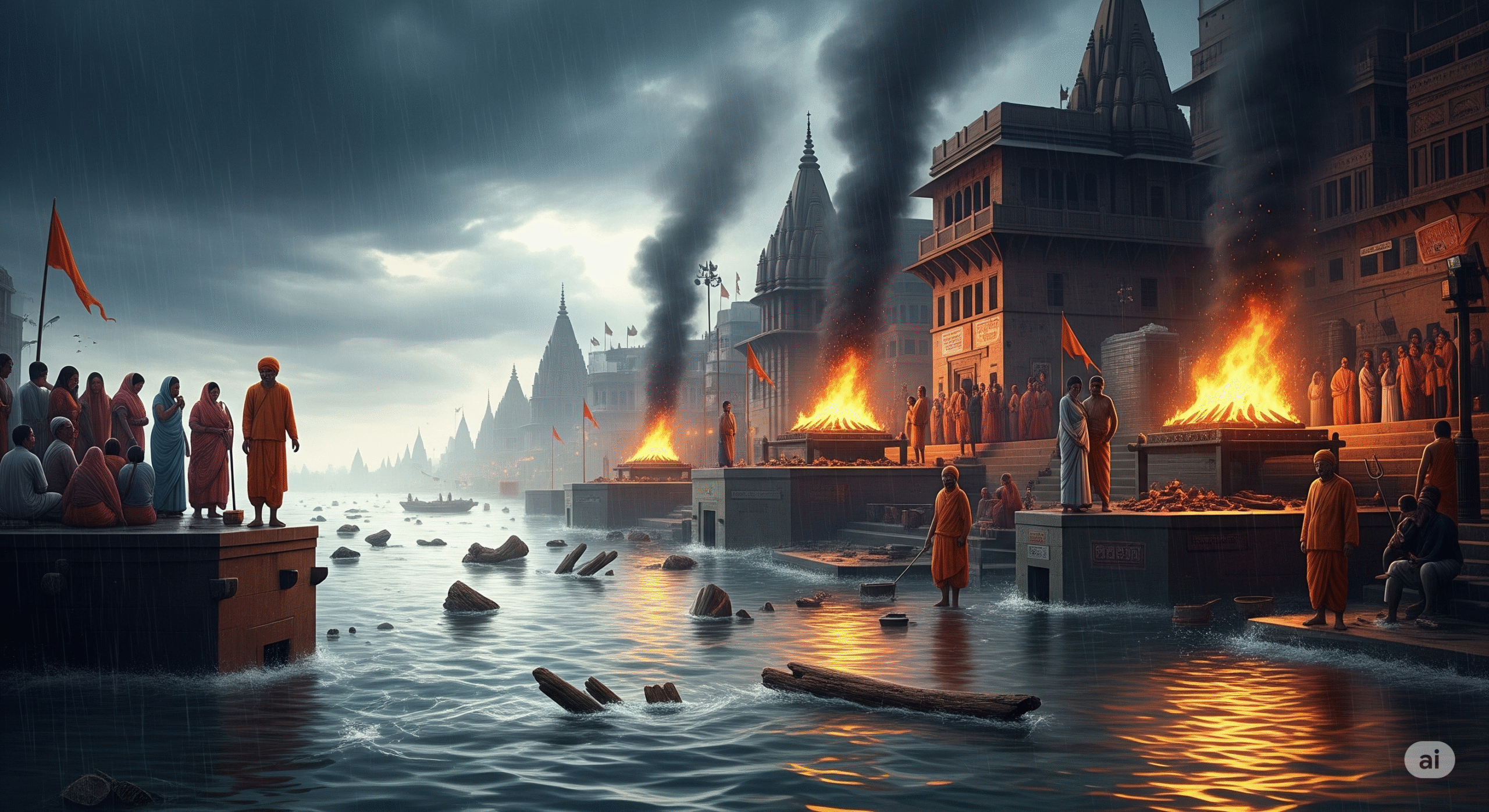
Varanasi, August 6, 2025 — In a surreal and heartbreaking development, the sacred Manikarnika Ghat, known as India’s most revered cremation ground, is now completely submerged under the rising waters of the Ganga River. For the first time in years, locals and families have been forced to perform last rites on rooftops of nearby buildings, as the ghat lies beneath several feet of water.
This disturbing scene reflects the serious flood situation across eastern Uttar Pradesh, especially in Varanasi where the Ganga is flowing above the danger mark.
⚠️ What’s Happening at Manikarnika Ghat?
Manikarnika Ghat, believed to be one of the oldest and most sacred cremation ghats in the world, typically witnesses hundreds of cremations daily. However, due to unprecedented flooding:
-
The entire ghat structure is underwater, making it impossible to perform rituals traditionally.
-
Pyres are now being arranged on terraces and rooftops of nearby homes, lodges, and temples.
-
Wooden logs, priests, and grieving families have been relocated to higher platforms, where rituals are continuing despite extreme constraints.
Videos and images from the scene show smoke rising from rooftops, chants of Ram Naam Satya Hai echoing above flooded streets, and firewood floating in the Ganga—a jarring blend of tradition and tragedy.
🏞️ Ganga Water Levels Continue to Rise
The Central Water Commission (CWC) has reported that:
-
The Ganga River is flowing over 1.8 meters above the danger mark in Varanasi.
-
The rise is due to continuous heavy rainfall in the upstream regions of Uttarakhand and eastern Uttar Pradesh.
-
Multiple ghats including Dashashwamedh, Harishchandra, and Manikarnika are submerged.
Cremation activities, though sacred and continuous at Manikarnika, have now been restructured to avoid health and sanitation risks.
🧘 Cultural Significance of Manikarnika Ghat
Manikarnika is not just a cremation site—it is believed to be liberation ground (moksha sthali), where those cremated attain freedom from the cycle of rebirth.
Every day, people from across India bring their deceased loved ones here in the belief that it ensures salvation.
With the ghat underwater:
-
Priests have adapted rituals to rooftop spaces, attempting to retain the sanctity.
-
Funeral pyres now burn on buildings, challenging both faith and tradition amid climate chaos.
🛑 Authorities on Alert
The Varanasi Municipal Corporation and District Administration have:
-
Issued warnings to avoid low-lying areas near the river.
-
Arranged for wood supplies, priest availability, and health checks on rooftops.
-
Set up emergency boats and safety teams for bodies being brought by boat.
Despite the situation, no interruption has occurred in the performance of final rites, a testament to the spiritual resilience of Kashi.
🌍 Climate Change and Urban Vulnerability
This is not an isolated incident. Rising flood levels in religious and urban centres like Varanasi signal:
-
The urgent need for flood-resilient infrastructure in heritage towns.
-
Climate change impact on river systems, monsoons, and water discharge from dams.
-
Inadequate urban planning near riverbanks, affecting both the living and the dead.
Environmentalists are calling for permanent elevated platforms and cremation zones to be built as part of smart city initiatives.
❓ Frequently Asked Questions (FAQs)
📌 Q1: Why is Manikarnika Ghat flooded?
Due to heavy monsoon rains and rising Ganga levels, the ghat is completely submerged, as the river has crossed the danger mark.
📌 Q2: Are cremations still happening at Manikarnika?
Yes, cremations have shifted to nearby rooftops and terraces, and rituals are being performed with the assistance of local priests and NGOs.
📌 Q3: Is this the first time Manikarnika has been flooded?
While seasonal water level rise is common, complete submergence of the ghat forcing rooftop cremations is extremely rare and severe.
📌 Q4: Is there a health risk due to cremations on rooftops?
Yes, authorities have raised concerns over air quality, hygiene, and fire safety, especially in densely packed areas. Measures are being taken to manage these risks.
📌 Q5: How can people help or contribute?
Local charities and organizations such as Kashi Moksha Seva Samiti are accepting donations for wood, logistics, and safety gear.